Technology Status: TRL 8 / Market Ready

NON-AUTOCLAVED
AERATED CONCRETE (NAAC).

Replacing the global AAC industry's most expensive step with advanced chemistry. Gas-Free AAC Production. Full Margin.

-80% CO₂ Footprint / m³
+++ Zero Gas AAC Alternative High Performance NAAC +++ No Autoclaves DIN EN 771-4 Compliant +++ Scalable Micro-Plants Low Capex AAC Production +++ Zero Gas AAC Alternative

WHAT IS
NAAC?

The Science of Gas-Free Aerated Concrete

Non-Autoclaved Aerated Concrete (NAAC) is a disruptive, structural building material designed to replace traditional Autoclaved Aerated Concrete (AAC) and Cellular Lightweight Concrete (CLC). While conventional AAC manufacturing requires massive, gas-fired pressure vessels (autoclaves) to cure the blocks under high-pressure steam, NAAC utilizes an advanced, self-heating exothermic chemical reaction.

By intelligently blending standard Portland cement, finely crushed calcite, quicklime, aluminum paste, and a proprietary micro-anchored PP-fiber matrix, the Aeralon NAAC formulation reaches internal core temperatures of over 100°C right in ambient air. This autogenous curing process completely eliminates the need for fossil-fueled boilers.

Solving the Shrinkage Paradox

Historically, air-cured or foam concrete suffered from severe drying shrinkage and structural cracking. Aeralon's IP solves this physical limitation. Our micro-anchoring technology mitigates thermal stress during the exothermic phase, achieving an unprecedented drying shrinkage of just 0.18 mm/m. This perfectly matches the dimensional stability of premium steamed AAC, without firing a single boiler.
THE AAC
ENERGY TRAP.

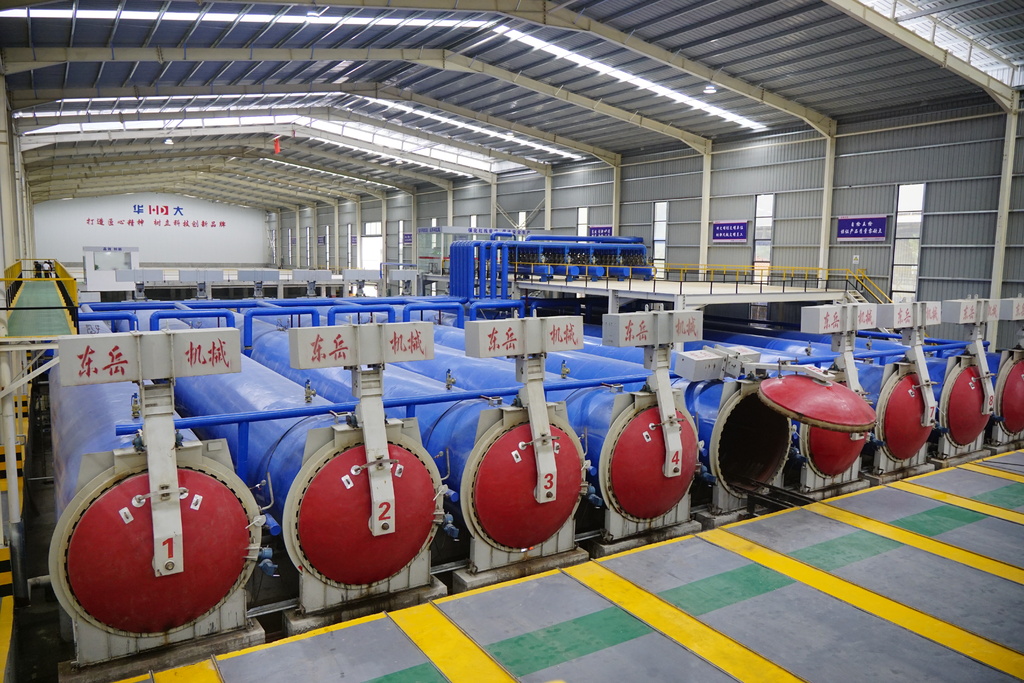
Traditional Aerated Concrete (AAC) production is stuck in a heavy-industry dead end. It must be "baked" at 190°C and 12 bar pressure in massive steel vessels, creating immense infrastructural barriers.

  • High Natural Gas Consumption
  • 15M+ € Plant CAPEX Barriers
  • Escalating CO₂ Tax Risks (EU ETS)
Traditional Heavy Industry Autoclave for AAC Production
Status Quo: Heavy AAC Industry
DIN EN 771-4 COMPLIANCE

NAAC TECHNICAL
VALIDATION.

Our NAAC material properties have been validated by independent laboratory testing. Aeralon meets standard autoclaved aerated concrete (AAC) requirements with significantly reduced energy input.

Curing Pressure

Process Energy
Standard AAC
12 Bar
Aeralon NAAC
0 Bar

Complete elimination of autoclaves. Atmospheric curing through chemical exothermy.

Compressive Strength

DIN EN 771-4
2.4 N/mm²
Structural Grade

Corresponds to strength class PP2. Perfectly suited for non-load-bearing masonry and structural infill.

Drying Shrinkage

Dimensional Stability
0.18 mm/m

Extremely low value. Significantly below the typical foam concrete cracking threshold. Guarantees zero plaster cracks.

Density & Thermal Insulation

Energy Efficiency
429 kg/m³
0.11 W/mK
Fire Class A1 (Non-combustible)
Breathable (μ = 9.57)

NAAC APPLICATIONS

Interior Walls (PP2 Class)

A seamless drop-in replacement for standard aerated concrete. Perfect for non-load bearing partitions with identical masonry application techniques.

Facades & Structural Infill

Ideal for skeletal concrete structures. Provides excellent thermal insulation properties without adding excessive dead load to the building.

Large Format Panels

Thanks to the micro-anchored PP-fiber matrix, NAAC exhibits excellent ductility, reducing handling breakage during the transport of large wall elements.

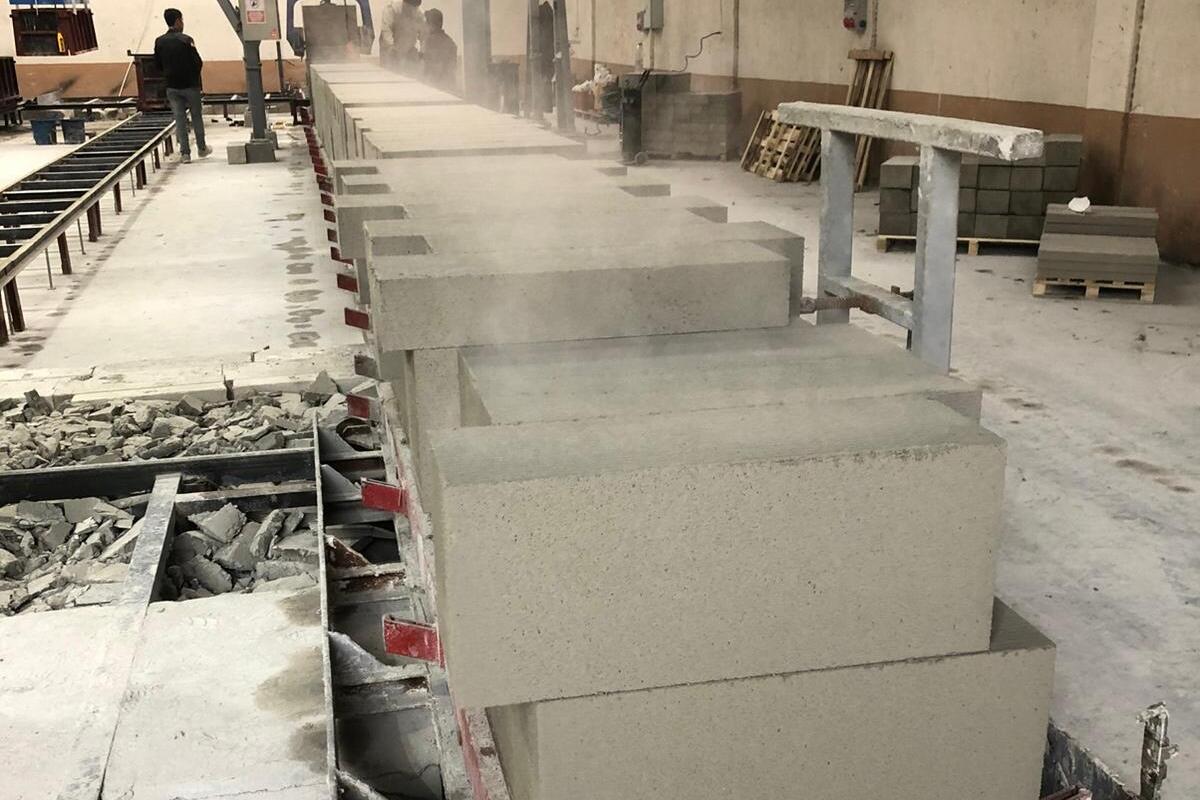
AERALON BLOCK STRUCTURE
Aeralon NAAC Block Close Up Structure
TRL 8 PROOF

REAL WORLD
CONSTRUCTION
PROOF.

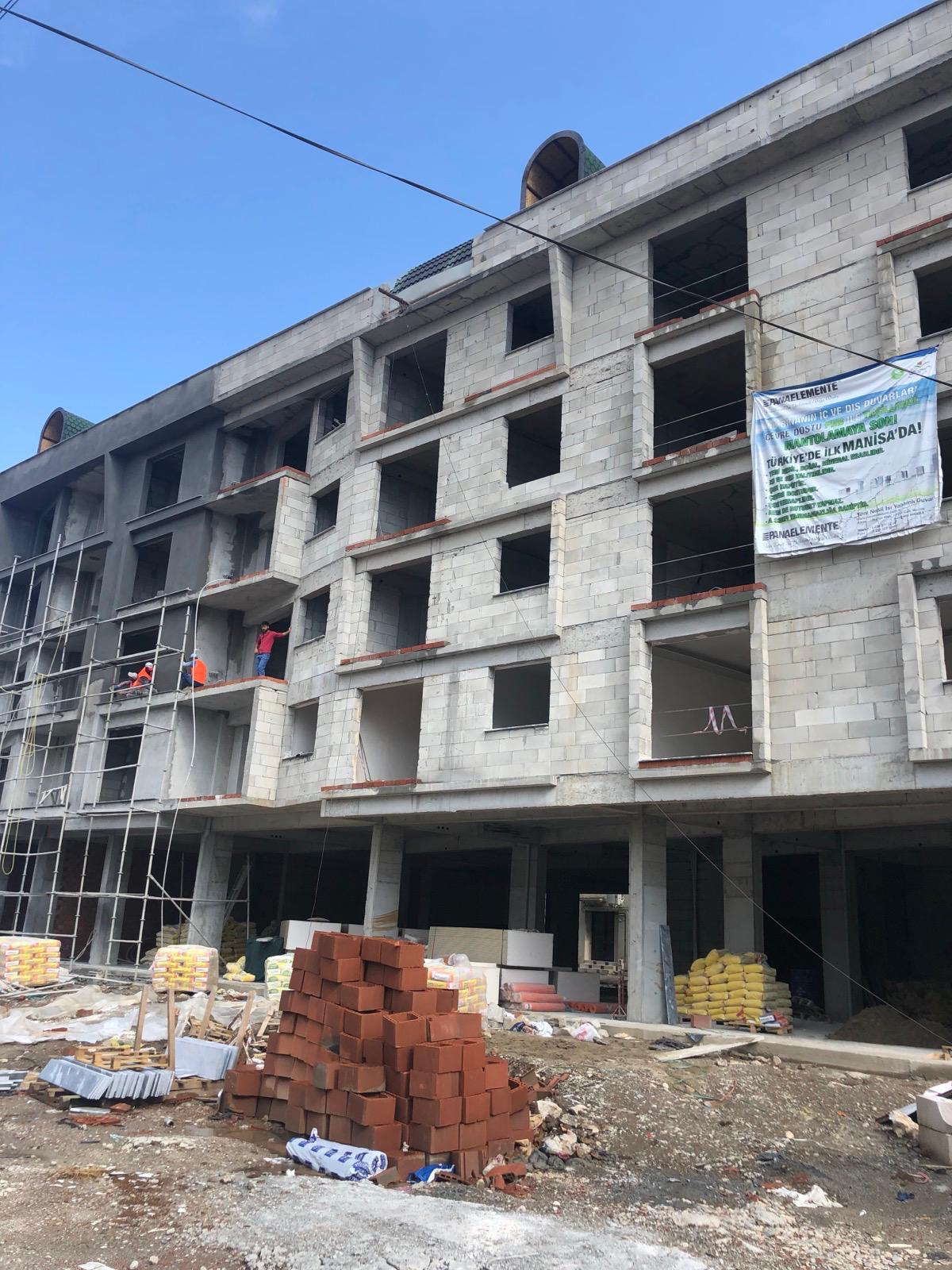
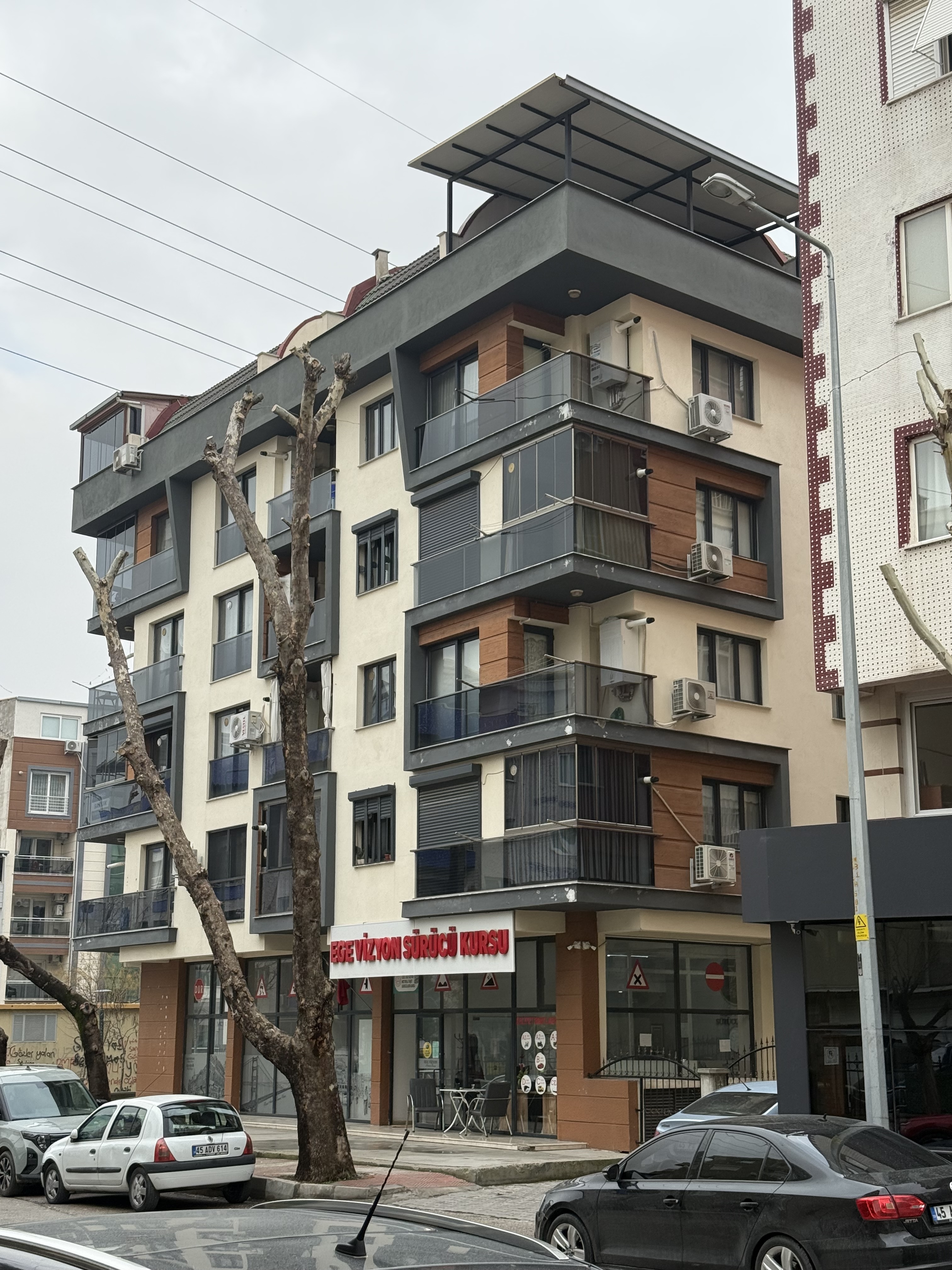
This is not a lab concept waiting for a reality check. We have successfully bridged the gap from chemistry to commercial reality. Entire multi-family residential settlements have already been built with NAAC technology in Turkey.

TTO Certified Official Structural Approval
DIN EN 771 Norm Compliance Testing
NAAC Construction Site Reference Turkey Finished Inhabited Building NAAC

Frequently Asked Questions (NAAC vs AAC)

Traditional Autoclaved Aerated Concrete (AAC) is cured inside high-pressure steam chambers (autoclaves) at 190°C and 12 bar pressure. Non-Autoclaved Aerated Concrete (NAAC) completely eliminates this step. NAAC relies on a specialized chemical formulation that generates its own internal heat (exothermic reaction) to cure naturally in ambient air, saving up to 80% in process energy and drastically reducing factory CAPEX.
Standard air-cured foam concrete (CLC) typically suffers from severe shrinkage (>1.0 mm/m). Aeralon utilizes a proprietary micro-anchoring technology with high-tensile PP-fibers. This intelligent matrix absorbs internal thermodynamic stress during the exothermic phase, resulting in a drying shrinkage of just 0.18 mm/m—perfectly matching premium steamed concrete.
Yes, our NAAC material has been tested by an independent laboratory against the technical criteria of DIN EN 771-4. The results confirmed compliance with all key performance requirements, including strength (2.4 MPa), density (429 kg/m³), and shrinkage behavior. The formal certification process in Germany is currently in preparation.
Aeralon automated NAAC production lines require 70-80% less CAPEX (capital expenditure) than traditional AAC plants. Because we eliminate the multi-million Euro investments required for high-pressure autoclaves, steam boilers, and heavy gas infrastructure, we enable highly profitable, localized "Micro-Plants".

PARTNER UP.

Looking for equipment manufacturers, pilot plant partners, and scaling investors.