THE NAAC REVOLUTION:
WHY FUTURE CONCRETE ISN'T BAKED ANYMORE.
The construction industry faces a dilemma: We need millions of new homes, but we must radically cut CO₂ emissions. The traditional autoclave process is an energetic dinosaur. The solution lies in the next generation of aerated concrete: NAAC.
What is NAAC? (The Definition)
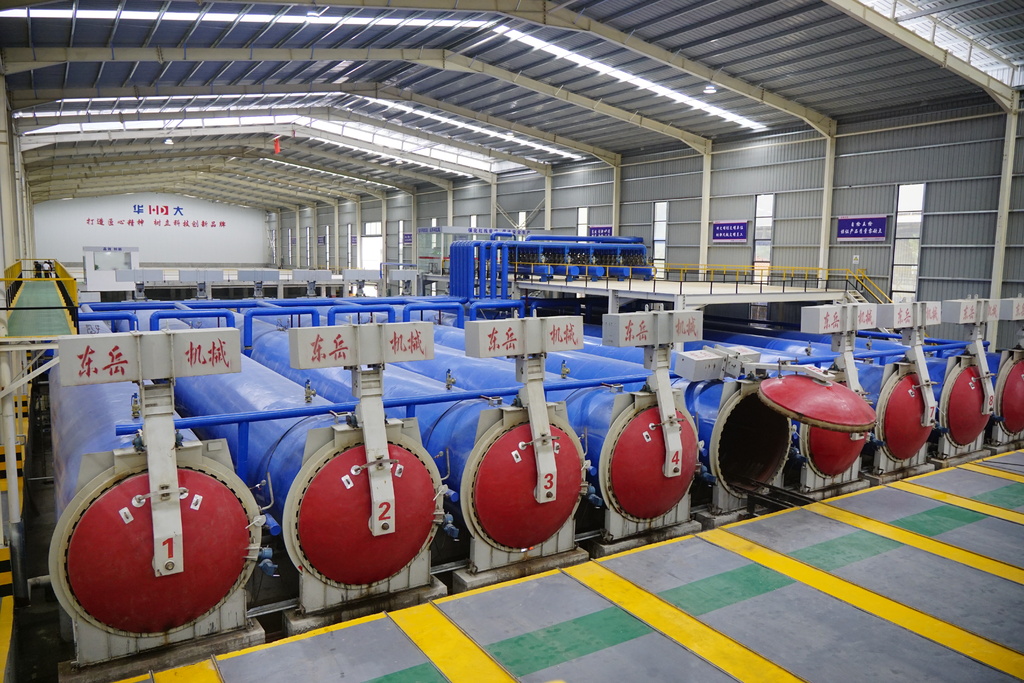
NAAC stands for Non-Autoclaved Aerated Concrete. Unlike classic Aerated Concrete (AAC/Ytong), which is "baked" at 12 bar pressure and 200°C, NAAC cures under atmospheric pressure.
This process eliminates the most energy-intensive part of the value chain. But NAAC is more than just "foam concrete." Modern recipes achieve strength values matching industry standards through fiber reinforcement and nano-crystallization.
1. Technical Deep Dive: The Chemistry
For engineers and technologists, the difference lies in matrix formation. While AAC relies on the formation of Tobermorite crystals in a steam vessel, modern NAAC (like Aeralon technology) utilizes exothermic hydration.
-
01
Pore Structure: Specialized surfactants create a closed-cell pore structure. This drastically reduces water absorption (capillarity) compared to AAC.
-
02
Fiber Reinforcement: To prevent the dreaded shrinkage, the matrix is reinforced with polypropylene or basalt fibers. This increases flexural tensile strength and prevents transport breakage.
-
03
Building Physics: NAAC is breathable (vapor diffusion open). With a thermal conductivity (λ) often below 0.10 W/mK, the block itself acts as insulation.
2. The Comparison: NAAC vs. Tradition
How does NAAC perform against established building materials? Here are the hard facts for investors:
| Criterion | NAAC (Aeralon) | AAC (Autoclaved) | Calcium Silicate (KS) |
|---|---|---|---|
| Production | Cold (Exothermic) | Steam Pressure | Steam Pressure |
| CO₂ Footprint | Very Low (~80kg/m³) | Medium (~200kg/m³) | Medium |
| CAPEX (Factory) | Low (Mixer only) | Very High (Autoclaves) | High |
| Insulation | Excellent | Good | Poor (Needs extra insulation) |
| Crack Risk | Low (Fiber matrix) | Medium (Brittle) | Low |
3. Sustainability & LCA (Life Cycle Analysis)
EU Taxonomy is forcing the construction sector to rethink. NAAC scores massively in Life Cycle Analysis:
- Energy Savings: Eliminating autoclaving saves approx. 150-200 kWh of primary energy per cubic meter.
- Regional Production: Since NAAC plants are compact and affordable (no massive industrial halls), they can be operated decentrally ("Mobile Factories"). This saves thousands of truck kilometers.
- Recycling: NAAC is purely mineral and 100% recyclable.
4. Operational Economics
For construction companies, the final price per square meter of wall is what counts.
"NAAC enables monolithic construction. This means: One block, no additional Styrofoam insulation on the facade."
This saves not only material costs but also labor time. Furthermore, the extremely low weight (approx. 400-500 kg/m³) significantly reduces costs for the building's statics and foundation.
5. Innovation & Future
The journey doesn't end with the block. Due to the liquid consistency before curing, the Aeralon recipe is perfect for:
- 3D Concrete Printing: Fast curing without an autoclave is a prerequisite for printed houses.
- Modular Construction: Manufacturing entire wall elements in the factory.
- CO₂-Neutral Cement: Our recipes are compatible with geopolymers and clinker-rich cement substitutes.
Frequently Asked Questions (FAQ)
About the Author
Aeralon Research Team
Aeralon Materials is a deep-tech company from Germany specializing in CO₂-reduced building materials. We license our patented NAAC technology to concrete plants worldwide.